
Legislation
Chain Liability Act (WKA)
Do you work with subcontractors, hirers, or temporary agency workers? Then you may be jointly responsible if someone further down the chain works without permission. The Labour Inspectorate establishes a framework for this. fines on which can amount to per employee €11,250. Chain liability means that illegal labor at someone else becomes your problem.
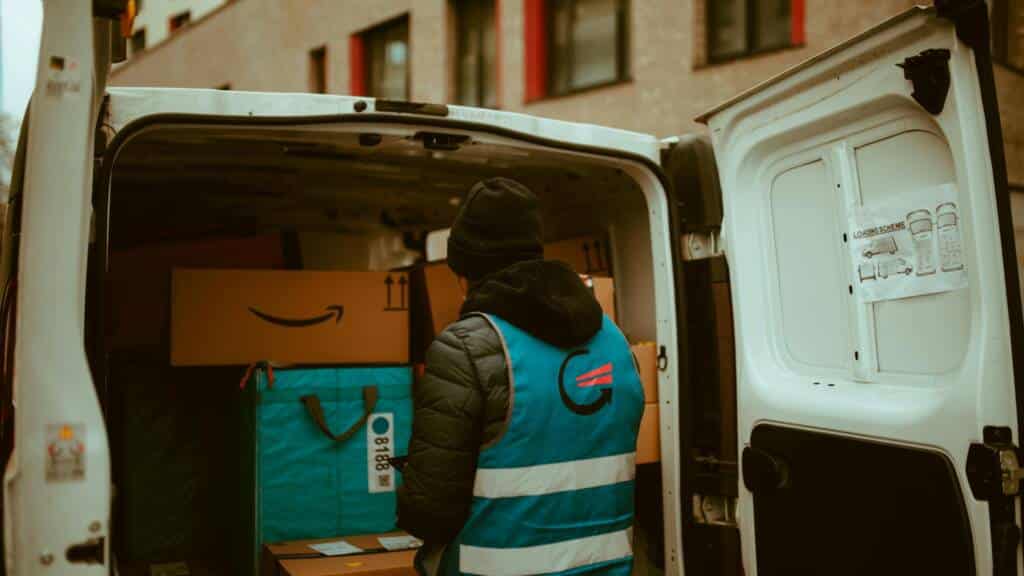
DEFINITION
What is chain liability?
Chain liability means that every link in a chain of clients and (sub)contractors can be held liable if someone working lower down in that chain is not authorized to do so. Do you outsource work or hire personnel? Then you are jointly responsible for who actually performs the work, even if you never hired that person yourself.
The Labour Inspectorate has long ceased to focus solely on the direct employer. Increasingly, the client or chain partner is held accountable for what happens lower down the chain. Fines run up to €11,250. per illegally employed worker.
DataChecker helps organizations maintain control over who works in their chain and whether that person is authorized to do so. With automated identity and work rights checks, you turn a legal obligation into a workable and verifiable process.
Anyone who outsources or hires out remains responsible for who works there and whether that person is authorized to do so. You must be able to demonstrate this.
1.5 million+
verifications per year
Verifications by DataChecker per year, for organizations that need certainty about who is working.


€11,250
maximum WAV fine for higher culpability, per employee
200+
countries covered for identity and employment rights checks
ISO 27001
certified information security
TWO CONCEPTS
What is the difference between chain liability and hirer's liability?
The term is used for two situations, but the core is the same: you are responsible for who does the work. The difference lies in *how* you get someone working.
WHEN OUTSOURCING
Chain liability
You outsource work to a contractor, who passes it on to a subcontractor. If someone is working anywhere in that chain without work rights, the Labour Inspectorate can also hold you accountable. You did not hire that person yourself, but you are positioned above them in the chain.
DataChecker gives you insight into who works through your chain and whether that person is authorized to do so, before things go wrong.
WHEN LOANING
Hirer's liability
You hire personnel through an employment agency or secondment agency. The people work under your supervision but are on someone else's payroll. If it turns out that someone does not have the right to work, you, as the hirer, are jointly responsible.
A thorough check with every hire, with a verifiable file as proof. This is how it works with DataChecker.
In both cases, the same principle applies: you cannot completely contract away responsibility. Whoever has the work done must be able to demonstrate that it is done properly.
Where things go wrong in the chain.
The Labour Inspectorate has long ceased to focus solely on the direct employer. Increasingly, the client or supply chain partner is held accountable. Three cases illustrate what is at stake.
NOS — AMSTERDAM — 2025
Labor Inspectorate wants to shut down Uber Eats delivery
The Dutch Labour Inspectorate wanted to temporarily halt Uber Eats' delivery operations in Amsterdam following repeated illegal employment. Compliance was enforced here at the supply chain client, not just at the individual delivery driver.
LABOR INSPECTION — AMSTERDAM — 2025
23 people working illegally in gym chain
During inspections of an Amsterdam gym chain, the Labor Inspectorate found at least 23 cleaners who were not permitted to work in the Netherlands. The work was channeled through intermediaries, which immediately raised the question of the chain relationship.
NOS — ARNHEM — 2026
Asylum seekers and Ukrainians exploited at Ibis Hotel
The Ibis Styles Hotel in Arnhem had about twenty asylum seekers and a group of Ukrainian laborers without valid work papers and for very low wages perform cleaning work. They were put to work in the hotel through various shady intermediaries.
The common thread: in every case, the focus shifted higher up the chain than just the direct employer. Anyone who outsources or hires external staff can be held accountable for what happens at the bottom.
Grip on the supply chain starts with those who work there..
AGAINST ILLEGAL LABOR
Right to Work
Right to Work It checks whether someone is permitted to work in the Netherlands under the Foreign Nationals Employment Act. This is different from an identity check: someone can be who they claim to be and still not have the right to work. For clients in logistics, temporary staffing, and transport, this is the difference between being able to demonstrate that you check your supply chain and running the risk through chain liability.
AGAINST ACCOUNT SHARING
Digital ID
Digital ID turns a one-time verification into a reusable digital identity in a smartphone wallet. During every shift or at every location, you scan a QR code and know that it is the same person who verified themselves at the time. Passing on an account no longer works, because the proof is tied to the person.
Under the hood: both solutions run on DataChecker ID Verification. Document checks, facial comparison, and liveness detection block forged documents and deepfakes right from the first verification.
How the WKA relates to other legislation.
The WKA does not stand alone. For a complete overview of your obligations regarding identity, employment law, and compliance.
Foreign Nationals Employment Act (WAV)
It regulates who is allowed to work in the Netherlands and when a work permit is required. The WAV is the direct legal basis for the Labour Inspectorate's enforcement action against illegal labour in the supply chain.
Identification Obligation Act (WID)
Requires employers to verify the identity of every employee using a valid identity document. Without a conclusive identity check, the WAV check is also incomplete.
AML
Relevant for financial institutions and compliance teams that are also bound by customer due diligence. Identity verification in the chain touches upon both the WAV and AML obligations.




How organizations keep their supply chain in order.
Three organizations, three facets of chain liability. From parcel delivery to transport and international temporary workers.
We stellen hoge eisen aan onszelf en houden continu in de gaten of we daaraan voldoen. Daarbij voorkomen we liever problemen dan dat we ze moeten oplossen.
Kees Rienks
Manager Quality, Compliance & Corporate Responsibility, Adecco
We had to catch up in customer identification and verification. And we are now doing that together with DataChecker doing.
Devrim Demirbas
Director Retail, Anadolubank
Chain liability and the correct identification of seconded personnel are also an issue for transport companies. DataChecker we fully comply with laws and regulations.
RET Rotterdam
Public transport Rotterdam
We have real control over who is allowed to work here, including from abroad.
Carriere Employment agency
International temporary workers

This is how you keep chain liability workable.
01
Map out your supply chain
Which subcontractors and hirers work for you, and in which sectors? Start with the parties performing work directly for you, and look at where the risk of illegal labor is greatest.
02
Check employment law before the start
Determine whether someone is permitted to work under the Foreign Nationals Employment Act before they start. Incorporate this check as a standard step in your onboarding and hiring process, not as a separate action afterwards.
03
Check if the right person is working
A one-time check is no guarantee that the same person is actually present on the work floor. With a reusable digital identity, you verify on-site whether the verified person is indeed the one doing the work.
04
Document everything in an audit-proof manner
Keep every inspection in a structured file, organized by person and party. In the event of an inspection by the Labour Inspectorate, you can then immediately demonstrate who was inspected, when, and with what result.
Monitoring of employment rights without compromising privacy.
Strong fraud prevention means that you process a lot of personal data: passport numbers, facial images, work permits. DataChecker is built on data minimization and EU processing, not on a collecting frenzy.

ISO 27001 certified
Independently reviewed information security policy. Annual audit of processes, access, and risk management.
EU data and data minimisation
Processing and storage within the EU, with privacy by design and data minimization as a starting point.
Audit-proof file
Every verification and re-inspection is recorded in a log file. Directly shareable during inspections by the Labour Inspectorate or supervisory authorities.
Fraud by a subcontractor is also your problem..
Anyone who outsources or hires out work remains responsible for who actually performs the work. The Labour Inspectorate is increasingly looking higher up the chain. For logistics, temporary staffing, and construction, this is no longer a marginal phenomenon.
RISKS FOR CLIENTS
- Temporary suspension of business activities
- Fines from the Labour Inspectorate
- Loss of broadcasting license or certification
- Reputational damage in the media and with clients
- Liability for wages and social security contributions
Questions about the Chain Liability Act.
What is chain liability?
Chain liability means that every link in a chain of clients and (sub)contractors can be held liable if someone works lower down in that chain without work rights. The legal basis lies in the Foreign Nationals Employment Act. The Labour Inspectorate enforces this law and can also hold clients and hirers accountable, not only the direct employer.
What is the difference between chain liability and hirer's liability?
Chain liability applies to work outsourced via (sub)contractors. Hirer's liability applies when you hire personnel through a temporary employment agency or secondment agency. In both cases, you remain jointly responsible for determining whether the deployed personnel are permitted to work. For the Temporary employment sector Additional obligations apply in the case of hirer's liability.
Who is liable in the chain for illegal labor?
Clients, main contractors, and hirers can all be held liable. The Labour Inspectorate looks at who actually has the work done, not just the direct employer. The legal basis for this lies in the Foreign Nationals Employment Act.
Does chain liability also apply to self-employed professionals and temporary agency workers?
Yes. Whether someone is deployed as a self-employed person, agency worker, or employee, the question of whether that person is permitted to work under the Foreign Nationals Employment Act remains. In addition, the obligations regarding hirer's liability apply to seconded agency workers. Right to Work-check provides certainty regarding employment law, regardless of the type of contract.
What can the Labour Inspectorate do about illegal employment?
The Netherlands Labour Inspectorate can carry out inspections, impose administrative fines on employers and chain parties, and, in serious cases, order the cessation of business activities. Since February 1, 2025, the standard fine amounts to €6,000 per illegally employed worker, rising to €11,250 in cases of higher culpability (source: Dutch Labour Inspectorate).
What role does the Foreign Nationals Employment Act play in this?
The Foreign Nationals Employment Act determines who may work in the Netherlands and when a work permit is required. Chain liability for illegal labor stems from the supervision of that law. Closely related is the Identification Obligation Act, which requires establishing the identity of every employee before the start of work.
How do I keep chain liability workable in my process?
By means of employment rights check and identity verification to incorporate it as a fixed step in your hiring and onboarding process, and to document every check in an audit-proof manner. This way, it becomes part of your process instead of separate manual follow-up. Schedule a demo to see how DataChecker sets this up for your organization.



Maintain control of your supply chain before the inspectors come knocking.
Whoever outsources or hires out remains responsible for who performs the work. DataChecker makes employment rights and identity verification a fixed, demonstrable step in your process.
